Sunday, 23 February 2014

The Charm & Sleaze of London's Soho

Each To His Own
I often take my bike on the train from Canterbury to London. Most of the time I find myself drawn to the same areas. My bike and I enjoy nothing more than cruising the seedy backstreets. 
Some travellers will always feel an aversion to certain environments. Best they stay away then. Personally I hate very commercial areas - places with gift shops, out of place shopping malls, tea shops selling tacky gifts, smack in the middle of areas of outstanding natural beauty etc. I notice lots of TripAdvisor reviews by people who hate seediness, sleaze and low-life areas of cities. Yet the latter is a big cultural draw for some visitors, and I am with them.


Image courtesy of www.creativeroots.org
Sleaze
Sleaze is hard to avoid in cities. All cities have a low-life, sleazy zone. Some cities are all sleaze, some would say. Often in the past such quarters were populated by immigrants, especially Chinese. Most still are. Usually they encompassed the red-light industry and with it a fair amount of gambling and crime. Desperate people find themselves here, living on the margins. Yet in a world full of artifice and 'Disnification', I find such locations to be the warm beating heart of 'real life'. Locate this area of any city and you will find it to be where the gritty writers, musicians and artists hang out. Here you can find people enjoying the 24hr buzz and excitement, who are willing and wanting to show and share their true selves. It's where music is made, new trends develop and genius is born. Yes, yes I know, it's also where diseases are spread and people are killed – get over yourself. 


Down Among The Low-life In London's Soho
Undeniably, in England amongst all of the sleaze available, one of the major hotbeds of such culture is to be found in London's Soho. This place smoulders with intrigue, passion, illegality and barely hidden attitude. It's been smouldering for a long time. There were opium dens here run by industrious Chinese immigrants long before Carnaby Street played host to Mods and Rockers. And where there are drugs there are sex and crime. Even the Chinese supermarkets in Chinatown hint of an exoticism beyond what is displayed on the shelves. Back in the early 1980's I remember going with a Chinese friend into the basement of one of these supermarkets. Amongst the sacks of Napa Cabbage and Star Fruit it housed a dimly lit illegal gambling den. Men in dirty white vests betting their entire month's wages or their restaurant' takings in a game of cards or Mahjong. Later I asked another friend in London (a cop) about it. Almost casually he said; "We allow the Chinese in the Gerrard Street area to police themselves. So long as they keep it local and under control, we find it's actually safer for everyone outside."


The Police keep an eye on Soho but often exercise a soft touch. Image courtesy of www.discoverelitepolice.com

Over time Soho has blended at its edges into other areas, such as Covent Garden. This is a less sleazy area but is now very trendy. It benefits from being adjacent to Soho and tourists easily find themselves there after walking up from Trafalgar Square, Piccadilly Circus or Leicester Square. Especially those put off by the hustling and the overt risk of robbery in the central Leicester Square area. But if frock and shoe shopping or tourist cafes are not your bag, I suggest you take some time to seek out some genuine charm in the seedy backstreets of Soho. Here you will find real London culture. Low-life culture, some might call it, but for me the low-life atmosphere is all part of the draw.


Alternative Brides - image courtesy of www.demitox.com

Eating Out In Soho
Outside of the sleazy atmosphere and the colourful characters on every street corner, Soho has other charms. It is a great area for foodies. The cafes and small restaurants along Store Street, St Anne's Place, Wardour Street and Berwick Street became popular in the so called swinging sixties but popular culture had discovered them long before that. Some have not been redecorated since the sixties! You can find good food here served in laid back, often confined environments. 
Those looking for Chinese food will find most of the busier places in Chinatown, around Gerrard Street and Lisle Street, Gerrard Place and Newport Place, plus the tiny 'China Village' passage of Newport Court. In Gerrard Street particularly, you will find top-end restaurants frequented by celebrities alongside busy Chinese supermarkets where the locals and the restauranteurs shop. Be careful, not all of these restaurants are good. Some are squarely aimed at tourists and non-Chinese. Lee Ho Fook and the tiny 'Poons' were always reliable but both have sadly closed. Quality goes up and down, especially as restaurant owners win and lose fortunes in big gambling adventures, so it's best to check review sites. I tend to check the Chinese Community Network magazine www.neehao.co.uk/ . 
In the narrow confines of Newport Court you will find seedy Chinese Dumpling shops / cafes where you can hardly believe you are not in Asia. The fact that few menus are in English here and one can't expect politeness, is usually a sign for me that I am in the right place.

Image courtesy of www.chinatownlondon.org

Backstreet Charm
For those seeking the backstreet charm I have mentioned above, there is a hint of it to be found in Newport Court and in the cheap Chinese / Japanese cafes around Newport Place at the top, but it's a little to close to the bustling tourist centre of Leicester Square so I suggest heading north to the other side of Shaftesbury Avenue, over to Wardour Street, into the Berwick Street market area via the steps just after the famous Windmill Theatre (based on Paris' Moulin Rouge). Here one can find genuine character and a fair amount of tasteful sleaze (a bit of tasteless sleaze too). Wander around these back streets, behind the theatres, up Archer Street and along the charming Brewer Street and you will find the real heart of the old West End. There are so many great places to discover and mostly fairly cheap. Shops selling old vinyl records, vintage shops run by vintage old people selling catering kitchen equipment or briefcases, perched comfortably alongside others selling whips, chains and black plastic dresses. There are also some great vintage pubs. Best not to flash your wealth or naivety around here, by the way. Once in the back streets, well-heeled visitors are considered fair game.


BM Records (25 D'Arblay Street) image courtesy of www.recordsworldwide.com

The Dog & Duck in Bateman's Street is rarely as quiet as this. Image courtesy of www.beerlens.com

A Literary Walking Tour
I have a particular penchant for visiting cities with a novel or a book of short stories in my pocket. Stories based in that area. Some of my favourites for bringing with me to this quarter are Fergus Linnane's 'London The Wicked City', Barry Miles' 'London Calling', Nigel Richardson's 'Dog Days In Soho' and, especially atmospheric, 'The Pimlico Tapes,' by A.K. Anders. Such topical books prove far more interesting and more rewarding, I would suggest, than following a traditional guidebook to discover an area.


A few other practical recommendations: 
For a traditional trolley service Dim Sum (the last in London), I suggest you go to New World Chinese Restaurant in Newport Place. For real Chinese dumplings, go to Baozi Inn, in Newport Court. It is tiny. If you are on the large size you might not be able to sit down. For a night out on the fringes of Soho, see if you can get into Ronnie Scott's Jazz Club, at 47 Frith Street or one of the stand-up comedy venues, like The Comedy Store in Piccadilly Circus. Better still I would suggest you wander around and look for yourself. Do that for half an hour after dark and you can be assured that something interesting will happen.

Monday, 10 February 2014

To Plan Or Take A Chance?

Chaos vs Order
In the extreme, that is what we are talking about. Planning in advance can make sure that a trip runs smoothly, reliably and without problems. No turning up in towns and finding there is not a hotel room to be had anywhere. No finding out later that you missed an amazing museum, art gallery or restaurant because you didn't check out the guidebooks in advance. No being invited for a game of golf and realising you have no golf shoes with you. How far does one go? How much planning is useful and when does it become a burden?

Pic Courtesy of www.urbantraveller.com

When it comes to preparing for a trip – especially an overland trip – too much planning can make for a somewhat less thrilling experience. Think about it. Most of us will remember how some of our most pleasurable trips away have been where unexpected things happened or decisions were made on the spur of the moment. The time you went to Vienna and were unexpectedly given free tickets to the opera but had no smart clothes with you, but were saved by a lovely couple you talked to at your hotel who had just been to a wedding and the husband loaned you his evening suit. You have remained firm friends ever since. I have had many experiences like this where I felt maybe fate had lent a hand and made something special happen for me. But how far does one go with this theory?

pic courtesy of www.him.uk.msm.com

Imagine going off on a week's holiday to Paris with no booking and only the clothes you are standing up in, relying on the fact that something will come up. Perhaps someone at a hostel you manage to find, will show you a Parisian fleamarket where you might come across some superb theatrical outfits. Wearing these around the cafes and bars of Montmartre you might then be courted by a fascinating Bohemian crowd who take you to outrageous parties and drag you off to a chateau for the weekend for a masked ball. The best week of your life! It could happen. Yet what if you took no money and no passport? Yes it could be the springboard for a thrilling adventure. Hiding under the tarpaulin of a truck trailer and evading customs. Hitchhiking to Paris and meeting fun-loving people who invite you to stay with them at their houseboat on the Seine or in their squat in an old regency mansion in the Champs Elysees. Again it could happen, but the lack of the passport could be a major cause of stress. Surely that would be one diversion too far?

Le Pompon - pic courtesy of www.rooshvforum.com

Le Fanfaron Comptoir - pic courtesy of www.lesamisdelapero.fr

The truth, most seasoned overland travellers discover in practice, is a balance of the two. Too much planning and your trip becomes tediously predictable. Too little and you end up cursing yourself for missing out on great opportunities – "If only I'd brought my swimming trunks," or "Why didn't I think to bring my driving license so we could have hired a car?"

Long Road Hard Lessons
Back in 2008-9 my son and I cycled 10,000 miles from Ireland to Tokyo. It was Sam's idea to do this when he was only ten. He was 18 when we set off so I'd had plenty of time to plan for it. I really enjoyed the planning part. I love setting off into the unknown but thinking it through first, working out distances and ideal places to stop on the way. It's almost as much fun for me as doing it. I really get pleasure out of working out what clothing and equipment I need to take; determining which clothes will fulfil a variety of purposes; keeping weight to a minimum; considering climate and what can or cannot be obtained along the way. I did all of these things and made frequent adjustments to these plans as my research uncovered new information. At the end of the trip, friends, the press, TV interviewers (we were on BBC Breakfast TV twice after our return) and other cyclists kept asking us, "what disasters occurred along the way - what went wrong?"  When we told them, "not much really," they looked disappointed. Sometimes even bored. I began to wish I had been less military-minded in my planning and that more had been left to chance. If Sam had done the trip with one of his school-friends, I told myself, plenty would have gone wrong. The results would have satisfied those who questioned us far more. But as someone else pointed out, the result of that could have been a tragic accident. Which is true.

Iran just after Turkish Border - We forgot to get enough cash before Iran and foreigners can't draw any inside Iran. This lack of planning meant we needed to be careful and camp more. We had to be more inventive. Memorable!

The Zen Art Of Balance
The answer is, as I have said, that one needs to keep a balance. Some things – like a passport, some money and perhaps a few phone numbers, are fairly essential. If you are going by bike then a puncture kit or spare tube and a multi-tool is probably a high priority. Beyond that, it can make life far more interesting if you leave things to chance. Have a vague idea of the direction you are going in or a probable destination perhaps, but leave the rest to be decided along the way. You will find it can be far more rewarding in the end, even if a few near disasters happen to send you off in an unexpected direction as you progress.
Remember, a problem – even a disaster – is an opportunity :-)


Our bestselling book 'Long Road Hard Lessons' is available in the UK from Waterstones and other good bookshops. It is also available from Amazon and Smashwords worldwide and as an e-book in all formats. See links in the right hand margin of this blog or enter the title into any internet search box.
Links:
View on Amazon.co.uk
View on Amazon.com 

Monday, 3 February 2014

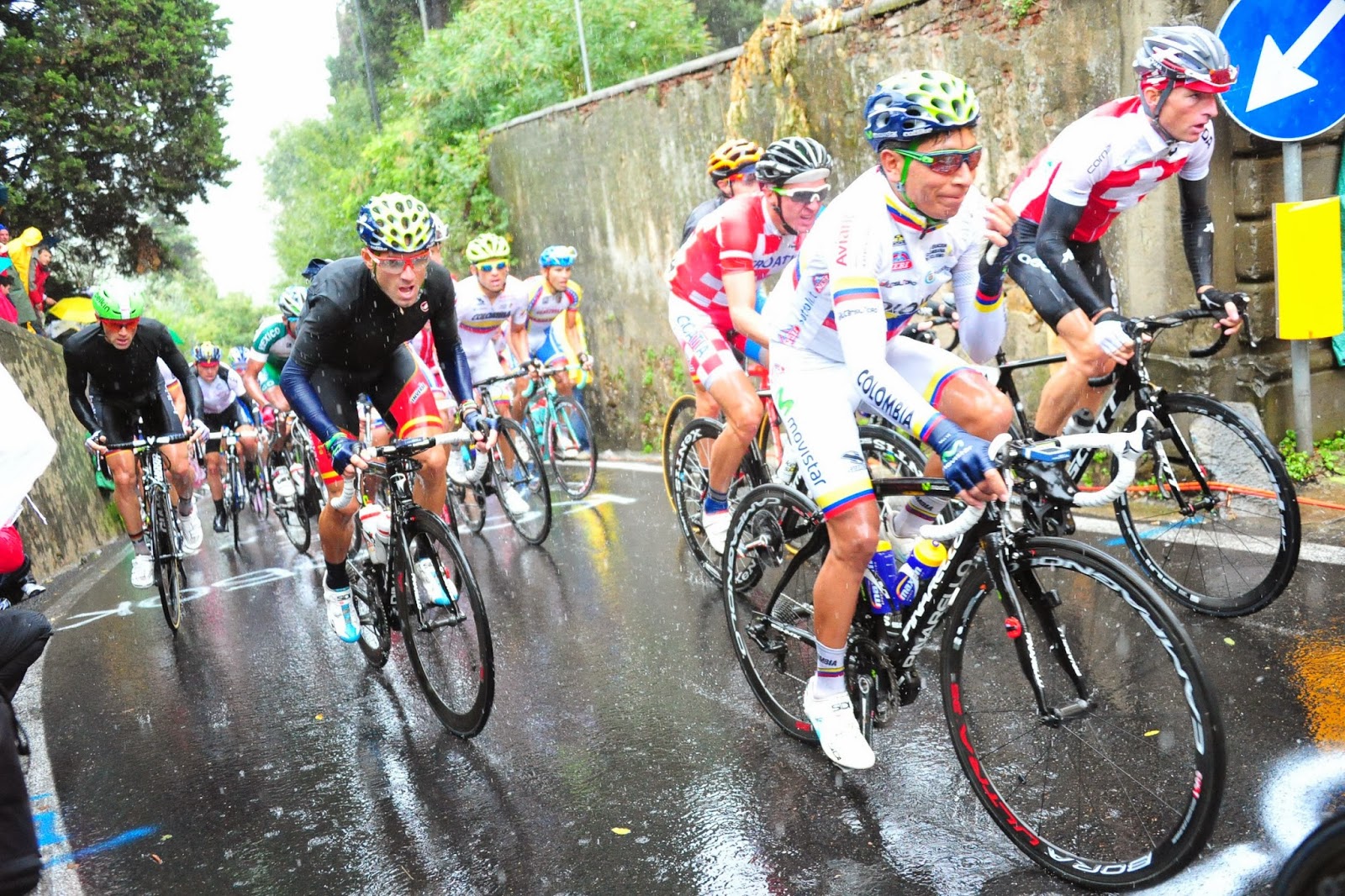
Cycling In The Rain

"A wet man does not fear the rain"

Courtesy of www.whiskynwheels.blogspot.com

So said Confucius - along with many other clever things. This post is a bit of do as I say, not as I do really, since I am a complete wuss about cycling in winter these days. It happened around the age of 54. After cycling 10,000miles across the world I felt I had earned the right to take it a bit easy on the cycling front. I don't enjoy getting cold much so I tend to cycle far less in winter. Rain during the warmer months I don't mind, however. Once you are wet through you can't get any wetter and so long as it's not freezing out that's tolerable. It's a bit like getting into cold water – it feels cold if you dip your toe in but jump in and you'll be fine in under a minute (I'm a surfer and in Europe that means getting in the water in winter as the waves are often better then).

Courtesy of www.chicocyclist.blogspot.com

Modern Equipment
There's a lot of rain about in Europe at present. When I was a younger man we used to wear capes for cycling in heavy rain. They came right down over your knees and could cover your hands on the bars. You wouldn't want to try cycling fast with one of these or you'd take off. The capes also often get caught in the wheels. Most bikes were so heavy then, however, that cycling fast in rain with wet gear was unlikely anyway. Some people still insist on using them, but then Asians cycle holding umbrellas! The worst thing about cycling capes and all other forms of anoraks in the olden days, was that they didn't breath. The slightest amount of exertion would cause extreme condensation. In half an hour you were almost as wet underneath it as if you hadn't bothered with a waterproof at all. But that all changed with Goretex and other breathable clothing that are now relatively affordable. I say relatively affordable but we are still talking about £100 plus for a breathable waterproof cycle jacket. However, even without breathable outer layers, there is an alternative.

This sort of setup will only work up to around 2mph!
Courtesy of www.humancyclist.wordpress.com


Modern cycle clothing is more than just a fetish
Courtesy of www.roadcyclinguk.com

Just Get Wet
Yes, don't bother trying to avoid it - just learn to live with getting wet. Outside the chillier winter months, this is not as bad as it sounds. Even in winter I would never wear waterproof trousers, so why bother with a waterproof top unless it's to keep your wallet dry (that's what your waterproof backpack / bum-bag is for). The fact is that these days you will notice that more and more cyclists are wearing lycra. Okay for many newbies this is a fashion statement. Just like motorcycling I have known people take up riding just so they can get into the gear. Surfing and wetsuits are the same. Let's face it we are talking fetish here! But it does not take a cyclist long to realise that there is a purpose to this lightweight stretchy stuff beyond feeling sexy (I say 'feeling' rather than 'looking', because nobody in their right mind thinks men or women look good in a pair of shorts with a pad in the bum that looks like you're wearing a nappy underneath). Firstly lycra avoids chaffing. Chaffing is unpleasant and ensures you will not want to cycle the next day. Secondly, they are lightweight and don't get in the way. Thirdly if you get drenched it only takes about half an hour even in overcast weather for them to dry. Finally, when you get home or to your B&B, you can wash a pair of padded lycra cycle shorts in the basin or shower, hang them up and they'll be dry by morning. That's a Godsend. So given all that, what's the problem with letting your lycra cycle jersey (that's a zip-up shirt with pockets at the back) get wet in the rain too? None whatsoever, so long as it's not cold. This is why most cyclists carry at least a superlight windproof shell. Even if it isn't waterproof it can be put on after your wet to stop you from catching a chill. One of these will fit in your pocket (if you have one), into a bum-bag or in a seatpost bag (that's what I do).

Pic courtesy of www.bicyclenetwork.com.au


Superlight Means More Pleasure Less Hassle
There is no doubt about it, carrying gear when you're cycling is a pain. Especially if you have a nice light bike and like to dart about or cover distance quickly. When preparing for our 10,000mile Ireland to Japan cycle trip, my son Sam and I did a few shorter rides (around 3 to 5 days). The idea was to see how far we could comfortably ride in a day (we agreed around 62miles / 100kms) and to see how much stuff we needed to carry. Every trip we did we realised we had more stuff than we needed. In the end we took about the right amount which fitted into two rear panniers and a bar-bag each plus a small tent. We could have managed with less. What we noticed during the big trip, was that on days where we cycled without all the gear (on days off) it was an absolute delight to be without it. This made me realise why it was that the very experienced long-distance cyclists who we met in places like Laos (some of these people ride thousands of miles abroad every year) seemed to be carrying very little. Yes they were staying in guesthouses and had flown to Bangkok or somewhere similar, but they were still doing vast milages. They had learned by painful experience, they told us. If you use modern fabrics and wash stuff every evening you can get away with hardly any clothes. A multi-tool, a first-aid kit, a phone, a tiny washbag, a pair of lightweight long trousers and shirt for evenings, a spare tube, a sun hat and a silk sleeping bag liner in a small cycle daypack is almost all some of them had apart from a passport and credit card. In my book, 'Ultralight' is really just a spare tube, gossamer-thin outer shell jacket, multitool, credit card, toothbrush and passport.

Straight off the plane and ready to go
courtesy of www.wheelsofchance.wordpress.com

With this amount you can go anywhere (& no broken spokes - weight = breaks)
Image courtesy of www2.arnes.si


This pic was on a blog under a heading "Ultralight Cycling"
It doesn't even come close to "Light" let alone Ultralight.
The saddle angle is a bowel disorder waiting to happen. Mental!
Image courtesy of www.userpages.bright.net

Read more about my 10,000mile cycle trip with my son in our bestselling book 'Long Road Hard Lessons':
or put the title into your local search engine. Also available at good bookshops in UK.

Sunday, 26 January 2014

Frack This Green & Pleasant Land?

The UK's Greatest Treasure
One of the reasons I cycle, is because I live in a country famous for its beautiful green countryside. For years this countryside has been protected from construction and other threats, in order to preserve what makes Britain special as a place to live and visit. We are a small country and apart from things like the queen and a some pretty special old buildings and monuments, it is this largely unspoiled countryside that brings people here. The same can be said for other European countries like France of course. So why would we risk spoiling that, especially when we have so little of it compared to large countries like the USA or Canada? That's easy – profit, greed and short-sightedness.

 Image courtesy of The Daily Mail

 Image courtesy of Blue Flag

Image courtesy of www.localnomad.com

Why All This Fuss About Fracking?
Fracking is currently a hot topic of debate in the UK. Rarely a day goes by where I don't overhear someone talking about it or see yet another cliched newspaper headline – Fracking Crazy, Fracking Disaster etc. We hear arguments on both sides. It reminds me of the nuclear power debates back in the seventies:
"It's perfectly safe," "It's an environmental disaster waiting to happen," "It's unavoidable because we need to find more energy sources to meet our needs," "There are better, safer, cleaner ways to get energy by putting more investment into renewables."


We Could Learn From The French
We have all heard the arguments. I am mindful that France has heard the arguments too, and France has made fracking illegal there. Yet as I write, a French fracking firm is seeking a license to frack in England! Are our politicians really that stupid that they would allow this? You needn't answer that.

Misinformation Meets Mr & Mrs Gullible
What worries me most is that anyone would believe the misinformation put out there by oil and gas companies and the people in the pay of those oil and gas companies. Why on Earth would we trust them? Did we trust tobacco companies when they said there was no evidence that cigarettes caused cancer? Well, yes I think some people did. Let's face it, these are some of the most profit obsessed companies in the world we are talking about. They do not mine oil or gas for good, they are solely focussed on money – the same as tobacco companies. These companies have shown us time and time again that they put profit before any concerns over our environment or wellbeing. Their only thoughts regarding care or caution are about what they can get away with. Their spokespersons appear on TV and say, "Look folks, they've been fracking in the USA for years and it's been fine. And it's made the USA almost self-sufficient in gas. We'd be crazy to turn down the opportunity!"

Do you remember the smoking beagles? - Image courtesy of The Guardian

From Sea To Shining Sea
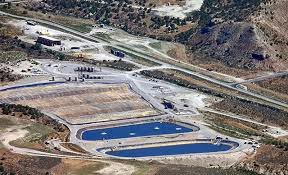
First thing is, the USA is a gigantic country compared to the UK. They can mess up quite a lot of their purple mountained majesty and fruited plains without too many people noticing. Second thing is, it's easy to make statements like "it's been fine there," without looking at the evidence, because the people who have had their local countryside ruined (for countess decades to come) are small voices in America. What chance do we have of hearing them over here? Well by chance I have a friend who lives in Ohio. She's pretty well balanced and well informed. She saw something I reposted on Facebook about fracking. She commented as soon as she saw it. Her words were "Don't any of you over there have any doubt about the devastating effects of fracking on the countryside. Large areas of Ohio have been left as filthy, uninhabitable swamps due to the devastation and pollution caused by fracking. She attached a photograph. Here it is plus a few more:


 Fracking causes minor local earthquakes - No problem, apparently

Tap water that catches fire is still safe to drink, apparently - tell that to the Smoking Beagles!

And the images from Texas are far worse. Have a good look: Texas Fracking Photos

I think we all know what to do. Let's not wait to find out the hard way, like the smoking beagles.

Saturday, 18 January 2014

A Constant Craving

A Childhood Obsession
As I have said in a previous blog post, I caught the cycling bug early. At around three years old I managed to persuade my grandmother to buy me a clattering contraption called a 'Mobo-bike'. It was covered in metal panels to make it look like a motorbike / Lambretta. The fact that it used to rattle like hell drove my parents to distraction, but not as much as the fact that I saw it as a means of escape from Fort Swain. It really was a case of 'the wind in my hair' (I had some back then). Once I had managed to drag the bike under the garden hedge (circumventing the tall, locked gate) I would hurtle down the pavement towards who knows where - my destiny I think I thought. All through childhood it was the same. So long as I had access to a working bicycle I knew I could up and go if things got too much for me. I found the rule-bound confines of an English childhood intolerable (much of it spent in Malaysia, Singapore and Germany, but the uptight system was pure expat English).


The Mobo-bike. I think it was a blue version of the top one.

Proof that my constant yearning for travel was my father's fault

Adult Escapism
I think, like many adult cyclists, I rediscovered cycling when I had children. As a teenager a motorcycle had seemed infinitely preferable. Inevitably a car appeared on the scene along with our first child, although I have never given up motorcycling. But it was the traffic congestion that first made me take to a bicycle again. My daughter needed dropping at playschool each morning and collecting in the afternoon. It was about three miles away. A little too far to walk and the roads were always busy, so I bought a new bike and put a child seat on the back. It was a revelation. Not only was it far quicker and cheaper, but both my daughter and I looked forward to those daily journeys. And it kept me fit. It was only a matter of a week or two before I began going off on short tours along the coast and around nearby Kent villages. Kent is known as The Garden Of England, and I discovered how much more pleasurable it was to experience it from the saddle of a bicycle.

Small children love cycling with their parents. 
Image courtesy of www.fancycar.com

Family Excursions On Wheels
My wife never much enjoyed cycling, although thankfully this has changed in recent times since a short holiday with friends, cycling along the superb Danube Cycle Path (Donauradweg). My son was the one who shared my love of cycling and still does, although my eldest daughter has become a recent convert - initially for ecological reasons. So family cycle outings have become an infrequent possibility. If you have read other posts on this blog, you will know that it became something more than that for my teenage son when we rode 10,000 miles from Ireland to Japan in 2008. My youngest daughter stubbornly still claims to loathe cycling after being forced to accompany us on a camping holiday along the Danube. I say it will be different when she has a boyfriend who cycles.

A reluctant cyclist following The Danube - now a convert (It's a Giant Halfway)

The delights of the Danube Cycle Path

The Power Of Nostalgia – A Constant Craving
So powerful is the memory of my 9 month cycle trip with my son in 2008-9 that the sight of a touring cyclist passing by still has my heart racing. For the last ten days I have been back in Tokyo – the destination of my 10,000 mile journey with my then teenage son. I have enjoyed my stay immensely. As the end approaches, I find myself regretting the fact that I have a plane ticket home. Planes are no way to enjoy a journey. You're lucky if you see anything. Your experience along the way is limited to a predictable menu of mainstream movies. I keep passing Tokyo cycle shops and I find myself examining bicycles, asking myself which one I would choose if I had to buy a bike to ride home to England. It may sound a crazy idea but of course I know it can be done without too much fuss or luggage. I have been lying awake at night, fantasising about a phone call to my wife and another to my business partner, telling them I will be delayed about six-months or so getting back. I in no way see this as any kind of sickness – far from it. This is how I know I am still healthy.

You can read about the 10,000mile cycle trip with my son Sam in our book, Long Road, Hard Lessons. See other links in right margin.

 Munar, Kerala, India - Yellapatty Tea Plantations. Very hilly.

Capadocia, Turkey. Sam, lovin' it.

Saturday, 4 January 2014

Tokyo Cycle Trends

Metropolitan Cycling

I am currently back in Tokyo, visiting an old friend with whom I shared a house here in the mid-eighties. That was when we were wild young men. Back in those days Tokyo astounded me with its size and traffic. Few people in Tokyo had their own cars and most people got around by metro, taxi or by bicycle. There were millions of bicycles in fact. This is still the case. Most of them in those days were small-wheeled shopper type bikes as they tend not to cycle very far. Tokyo is a huge city - the world's biggest in fact. Go up any tall building and you will find that you can rarely see as far as the outskirts. It's about sixty or seventy miles diameter in general.

View from Tokyo Metropolitan Building (Shinjuku)

Night views of Tokyo conjure up thoughts of film 'Bladerunner'

Most Tokyo cyclists use their bikes to pop down to the supermarket (many open all night in this 'Bladerunneresque' world) or to ride to the nearest metro station for work. The multi-storey cycle storage parks outside stations these days are quite fascinating. I visit my friends here every three or four years and notice each time how there has usually been a change of bicycle fashion during my absence. Over the years I have seen this trend-conscious city pass through a fashion for grown-up tricycles, another for tiny folding bikes, then another for traditional Dutch-style bikes. This time I notice a trend for a kind of small wheeled racing bike. This is not a type of bike I have seen in England or anywhere else although it could be said to vaguely resemble those very rare and expensive modern Moulton bikes. So every time I see one, I photograph it and hope that the owner might arrive and engage me in conversation, or even offer me a ride – the Japanese are very hospitable.


 Latest Cycle Fashion - Nakano, Tokyo 2013/14

A Cautionary Tale About Drunk Cycling

Back in the eighties I got involved in some drunken youthful antics involving an attempt at getting to a late night party on a 'borrowed' bicycle with flat tyres, after leaving some sleazy downtown bar. Such behaviour in the early hours tends to stand out in Japan, especially when the rider is a westerner, and I was soon apprehended by a cycling policeman with a long truncheon, who easily outpaced me. I only narrowly escaped deportation after being interrogated and locked up for the night. Releasing me the next day they told me I had fitted the description of an American assassin they were hunting, after an international war between two drug gangs. They had phoned my elderly landlady in the early hours, who had eventually convinced them I was only an adventurous English teacher with a love of strong sake. Fortunately they still allow me back.


Many Ways To Arrive In Tokyo

In 2009 my teenage son and I arrived in Tokyo by bicycle after riding nearly 10,000 miles from Dingle in the west of Ireland. Cycling into Tokyo and down the main streets of a city I had been so familiar with in the past was a surreal experience for me. It proved so for others too. People struggled to get their heads around it. As I have said, many people in Tokyo cycle, but rarely further than one or two miles at the most. We stayed in Tokyo for a month at the end of our long expedition and often got around the city by bike. It can be a hard city to find one's way around and we frequently found ourselves stopping to ask for directions. Ironically, we found that a request to be shown the correct route to take in order to get to Takao, Kamakura or even Shibuya (not far from the centre) was usually met with a look of incredulity:
"No no, you can't possibly get there by bike sir, it's more than ten kilometres away!"

 Sam in Nam Ban Oon, Laos - March 2009

 Near the Turkey-Iran border - Sept 2008

Arriving back home in Canterbury - June 2009

You can read more about our Ireland to Japan father and son expedition, along with specific details about cycling in Japan, in our book Long Road, Hard Lessons:

Book on Amazon UK
Book on Amazon.com
Book via Smashwords