Sunday, 26 January 2014

Frack This Green & Pleasant Land?

The UK's Greatest Treasure
One of the reasons I cycle, is because I live in a country famous for its beautiful green countryside. For years this countryside has been protected from construction and other threats, in order to preserve what makes Britain special as a place to live and visit. We are a small country and apart from things like the queen and a some pretty special old buildings and monuments, it is this largely unspoiled countryside that brings people here. The same can be said for other European countries like France of course. So why would we risk spoiling that, especially when we have so little of it compared to large countries like the USA or Canada? That's easy – profit, greed and short-sightedness.

 Image courtesy of The Daily Mail

 Image courtesy of Blue Flag

Image courtesy of www.localnomad.com

Why All This Fuss About Fracking?
Fracking is currently a hot topic of debate in the UK. Rarely a day goes by where I don't overhear someone talking about it or see yet another cliched newspaper headline – Fracking Crazy, Fracking Disaster etc. We hear arguments on both sides. It reminds me of the nuclear power debates back in the seventies:
"It's perfectly safe," "It's an environmental disaster waiting to happen," "It's unavoidable because we need to find more energy sources to meet our needs," "There are better, safer, cleaner ways to get energy by putting more investment into renewables."


We Could Learn From The French
We have all heard the arguments. I am mindful that France has heard the arguments too, and France has made fracking illegal there. Yet as I write, a French fracking firm is seeking a license to frack in England! Are our politicians really that stupid that they would allow this? You needn't answer that.

Misinformation Meets Mr & Mrs Gullible
What worries me most is that anyone would believe the misinformation put out there by oil and gas companies and the people in the pay of those oil and gas companies. Why on Earth would we trust them? Did we trust tobacco companies when they said there was no evidence that cigarettes caused cancer? Well, yes I think some people did. Let's face it, these are some of the most profit obsessed companies in the world we are talking about. They do not mine oil or gas for good, they are solely focussed on money – the same as tobacco companies. These companies have shown us time and time again that they put profit before any concerns over our environment or wellbeing. Their only thoughts regarding care or caution are about what they can get away with. Their spokespersons appear on TV and say, "Look folks, they've been fracking in the USA for years and it's been fine. And it's made the USA almost self-sufficient in gas. We'd be crazy to turn down the opportunity!"

Do you remember the smoking beagles? - Image courtesy of The Guardian

From Sea To Shining Sea
First thing is, the USA is a gigantic country compared to the UK. They can mess up quite a lot of their purple mountained majesty and fruited plains without too many people noticing. Second thing is, it's easy to make statements like "it's been fine there," without looking at the evidence, because the people who have had their local countryside ruined (for countess decades to come) are small voices in America. What chance do we have of hearing them over here? Well by chance I have a friend who lives in Ohio. She's pretty well balanced and well informed. She saw something I reposted on Facebook about fracking. She commented as soon as she saw it. Her words were "Don't any of you over there have any doubt about the devastating effects of fracking on the countryside. Large areas of Ohio have been left as filthy, uninhabitable swamps due to the devastation and pollution caused by fracking. She attached a photograph. Here it is plus a few more:


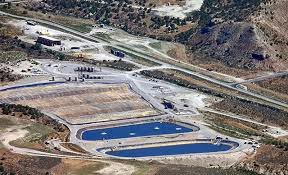


 Fracking causes minor local earthquakes - No problem, apparently

Tap water that catches fire is still safe to drink, apparently - tell that to the Smoking Beagles!

And the images from Texas are far worse. Have a good look: Texas Fracking Photos

I think we all know what to do. Let's not wait to find out the hard way, like the smoking beagles.

Saturday, 18 January 2014

A Constant Craving

A Childhood Obsession
As I have said in a previous blog post, I caught the cycling bug early. At around three years old I managed to persuade my grandmother to buy me a clattering contraption called a 'Mobo-bike'. It was covered in metal panels to make it look like a motorbike / Lambretta. The fact that it used to rattle like hell drove my parents to distraction, but not as much as the fact that I saw it as a means of escape from Fort Swain. It really was a case of 'the wind in my hair' (I had some back then). Once I had managed to drag the bike under the garden hedge (circumventing the tall, locked gate) I would hurtle down the pavement towards who knows where - my destiny I think I thought. All through childhood it was the same. So long as I had access to a working bicycle I knew I could up and go if things got too much for me. I found the rule-bound confines of an English childhood intolerable (much of it spent in Malaysia, Singapore and Germany, but the uptight system was pure expat English).


The Mobo-bike. I think it was a blue version of the top one.

Proof that my constant yearning for travel was my father's fault

Adult Escapism
I think, like many adult cyclists, I rediscovered cycling when I had children. As a teenager a motorcycle had seemed infinitely preferable. Inevitably a car appeared on the scene along with our first child, although I have never given up motorcycling. But it was the traffic congestion that first made me take to a bicycle again. My daughter needed dropping at playschool each morning and collecting in the afternoon. It was about three miles away. A little too far to walk and the roads were always busy, so I bought a new bike and put a child seat on the back. It was a revelation. Not only was it far quicker and cheaper, but both my daughter and I looked forward to those daily journeys. And it kept me fit. It was only a matter of a week or two before I began going off on short tours along the coast and around nearby Kent villages. Kent is known as The Garden Of England, and I discovered how much more pleasurable it was to experience it from the saddle of a bicycle.

Small children love cycling with their parents. 
Image courtesy of www.fancycar.com

Family Excursions On Wheels
My wife never much enjoyed cycling, although thankfully this has changed in recent times since a short holiday with friends, cycling along the superb Danube Cycle Path (Donauradweg). My son was the one who shared my love of cycling and still does, although my eldest daughter has become a recent convert - initially for ecological reasons. So family cycle outings have become an infrequent possibility. If you have read other posts on this blog, you will know that it became something more than that for my teenage son when we rode 10,000 miles from Ireland to Japan in 2008. My youngest daughter stubbornly still claims to loathe cycling after being forced to accompany us on a camping holiday along the Danube. I say it will be different when she has a boyfriend who cycles.

A reluctant cyclist following The Danube - now a convert (It's a Giant Halfway)

The delights of the Danube Cycle Path

The Power Of Nostalgia – A Constant Craving
So powerful is the memory of my 9 month cycle trip with my son in 2008-9 that the sight of a touring cyclist passing by still has my heart racing. For the last ten days I have been back in Tokyo – the destination of my 10,000 mile journey with my then teenage son. I have enjoyed my stay immensely. As the end approaches, I find myself regretting the fact that I have a plane ticket home. Planes are no way to enjoy a journey. You're lucky if you see anything. Your experience along the way is limited to a predictable menu of mainstream movies. I keep passing Tokyo cycle shops and I find myself examining bicycles, asking myself which one I would choose if I had to buy a bike to ride home to England. It may sound a crazy idea but of course I know it can be done without too much fuss or luggage. I have been lying awake at night, fantasising about a phone call to my wife and another to my business partner, telling them I will be delayed about six-months or so getting back. I in no way see this as any kind of sickness – far from it. This is how I know I am still healthy.

You can read about the 10,000mile cycle trip with my son Sam in our book, Long Road, Hard Lessons. See other links in right margin.

 Munar, Kerala, India - Yellapatty Tea Plantations. Very hilly.

Capadocia, Turkey. Sam, lovin' it.

Saturday, 4 January 2014

Tokyo Cycle Trends

Metropolitan Cycling

I am currently back in Tokyo, visiting an old friend with whom I shared a house here in the mid-eighties. That was when we were wild young men. Back in those days Tokyo astounded me with its size and traffic. Few people in Tokyo had their own cars and most people got around by metro, taxi or by bicycle. There were millions of bicycles in fact. This is still the case. Most of them in those days were small-wheeled shopper type bikes as they tend not to cycle very far. Tokyo is a huge city - the world's biggest in fact. Go up any tall building and you will find that you can rarely see as far as the outskirts. It's about sixty or seventy miles diameter in general.

View from Tokyo Metropolitan Building (Shinjuku)

Night views of Tokyo conjure up thoughts of film 'Bladerunner'

Most Tokyo cyclists use their bikes to pop down to the supermarket (many open all night in this 'Bladerunneresque' world) or to ride to the nearest metro station for work. The multi-storey cycle storage parks outside stations these days are quite fascinating. I visit my friends here every three or four years and notice each time how there has usually been a change of bicycle fashion during my absence. Over the years I have seen this trend-conscious city pass through a fashion for grown-up tricycles, another for tiny folding bikes, then another for traditional Dutch-style bikes. This time I notice a trend for a kind of small wheeled racing bike. This is not a type of bike I have seen in England or anywhere else although it could be said to vaguely resemble those very rare and expensive modern Moulton bikes. So every time I see one, I photograph it and hope that the owner might arrive and engage me in conversation, or even offer me a ride – the Japanese are very hospitable.


 Latest Cycle Fashion - Nakano, Tokyo 2013/14

A Cautionary Tale About Drunk Cycling

Back in the eighties I got involved in some drunken youthful antics involving an attempt at getting to a late night party on a 'borrowed' bicycle with flat tyres, after leaving some sleazy downtown bar. Such behaviour in the early hours tends to stand out in Japan, especially when the rider is a westerner, and I was soon apprehended by a cycling policeman with a long truncheon, who easily outpaced me. I only narrowly escaped deportation after being interrogated and locked up for the night. Releasing me the next day they told me I had fitted the description of an American assassin they were hunting, after an international war between two drug gangs. They had phoned my elderly landlady in the early hours, who had eventually convinced them I was only an adventurous English teacher with a love of strong sake. Fortunately they still allow me back.


Many Ways To Arrive In Tokyo

In 2009 my teenage son and I arrived in Tokyo by bicycle after riding nearly 10,000 miles from Dingle in the west of Ireland. Cycling into Tokyo and down the main streets of a city I had been so familiar with in the past was a surreal experience for me. It proved so for others too. People struggled to get their heads around it. As I have said, many people in Tokyo cycle, but rarely further than one or two miles at the most. We stayed in Tokyo for a month at the end of our long expedition and often got around the city by bike. It can be a hard city to find one's way around and we frequently found ourselves stopping to ask for directions. Ironically, we found that a request to be shown the correct route to take in order to get to Takao, Kamakura or even Shibuya (not far from the centre) was usually met with a look of incredulity:
"No no, you can't possibly get there by bike sir, it's more than ten kilometres away!"

 Sam in Nam Ban Oon, Laos - March 2009

 Near the Turkey-Iran border - Sept 2008

Arriving back home in Canterbury - June 2009

You can read more about our Ireland to Japan father and son expedition, along with specific details about cycling in Japan, in our book Long Road, Hard Lessons:

Book on Amazon UK
Book on Amazon.com
Book via Smashwords

Saturday, 14 December 2013

The Humiliation of Heavyweight Cycling

GUEST BLOG
by Alain Lenain

Alain is a somewhat fanatical cycling friend of mine. Like me he is a fan of long-distance cycling and like me he doesn’t like to see people carrying too much luggage. Unlike me he is a Frenchman. As we are both members of the touring cyclist hosting organisation https://www.warmshowers.org/ , we both regularly have people come to stay at our houses, on their way cycling through Europe. Many are the times that our guests stop off at a courier shop after leaving one of our houses, in order to post some unnecessary luggage home. Discussing the subject again recently, Alain told me about one particularly memorable case. I laughed a lot and so asked him to write a guest blog on the subject. Below is the result:

Alain Lenain will stop in a downpour - I don't know the French word for 'furtive'

You call it minimalism if you like, Mark, but I say it's just common sense!
I still think about David, a rather bulky cyclist, born in London living down-under, who came for his annual cycle trip to Europe. I was living in a French farmhouse at the time. David was aiming for Denmark where his daughter lived and worked.
David’s arrival in Paris had already been delayed by two whole weeks, courtesy of the Eyjafjallajokull volcano, but he had made it. He had got in touch asking me to put him up on his way up the coast of northern France. He was coming via another Warmshowers host in Dieppe, so I knew he had over 130 Km to cover to get to my place. As I often do, I arranged to meet him along the way. It was agreed that Le Crotoy would be about right. Not only a beautiful fishing village on the bay of the Somme, but also a great spot for lunch. You can get a moules-frites there for 8 Euro you know!
Having eaten my breakfast and allowed myself plenty of time to get to our rendez-vous, I contacted his previous evening's host to check that he had taken to the road. He told me that David was still having breakfast.
“Ah well,” I said, “we arranged to meet in Le Crotoy, we're sure to meet up somewhere along the way.”

Alain demonstrating baguette eating technique to an English cyclist

It's an easy ride to the Baie de Somme. Leaving behind me the rolling hills of the Boulonnais, I followed totally flat roads into Rue, a restful little town, and then through the marshy area around the Baie de Somme to Le Crotoy on the northern edge of the bay. This area is a haven for tourists, especially cyclists, both of the hardened and weekender type – there are cycle tracks everywhere. Le Crotoy is very small, so it isn't hard to find someone you're meeting, and yet there was no sign of David. My eyes turned in the direction of Saint-Valéry-sur-Somme as luckily there is only one way in from Le Tréport, which is the first town after Dieppe. I saw no touring cyclist.
Rather than just wait there (I find inactivity very tiring), I set off thinking to meet David further along the route.
Now this ‘Baie de Somme’ is large, and although Saint-Valéry is only 3 Km from Le Crotoy as the crow flies, it’s 15 by road. Still, it was pleasant enough weather and the cycling was far from difficult. And it was here, as I entered Saint Valéry, that I spotted, coming towards me, a rather massive apparition on the horizon. As it came nearer it became obvious that it was a touring cyclist. You can't miss them; they seem to be on a mission. The road was flat, long and straight so it took a while for him to fill my field of vision. And boy, did it fill quickly! To start with, he was large. He turned out to weigh just over 100 Kg. I looked at his bike. To me it had the allure of a donkey, with more bags, panniers and rolled packs than I've seen in a Decathlon!
We stopped and exchanged greetings. I was mindful that here was a guy who weighs 100 Kg, whose bike weighs a good 45 Kg with all that luggage, so I offered to take a couple of his bags; to which he responded that it would be cheating. “Fair enough, it's his decision,” I thought. In any case the weight to power ratio would be in his favour on the flat once he got going. Yet I knew hills awaited us not too far away. I tend to call them flat hills but they're not really! I reminded myself that we had 85 Km to cover and it was already lunch-time.
Side by side we cycled straight through Le Crotoy with no time to stop for lunch. We chatted as we meandered along the cycle track. David told me how he'd recently done the Melbourne 300 Km challenge in record time, yet in the same breath told me how much his right knee had been playing up. Again I offered to take some of his load from him but he refused, saying that the knee was alright now.
It wasn't long before those flat hills appear and, very quickly, the power to weight ratio tilted over. David was almost cycling backwards.
“Are there more of these?” He asked.
“No! It's all downhill from here,” I told him. It was a big joke to me; less so for David, I was soon to discover.

Now something had begun to puzzle me. How David had managed to get to Saint-Valéry all the way from Dieppe in record time I could not understand. Enquiring about his breakfast I discovered that he had left long after I had called his host. He had in fact been given a lift by his host, since he worked in Le Tréport, en route. A lift of around 30 Km!
“And that is not cheating then?” I said, engaging mouth before brain.


France is full of 'flat hills' - The Boulonnais Region

Prior to him arriving David had told me about his wish to go via Le Touquet and I had managed during our pre-tour e-mails to change his mind, because of the detour it presented between Dieppe and my home. In any case it was agreed that he would stay with us for a couple of nights so that on his second day we could visit Le Touqet without luggage. What was attracting him to Le Touquet I did not know. He just wanted to see it, because it's there, I can only suppose.
The last hill did more than make David cycle backwards. He walked it. For those of you out there who do cycle, and who take it reasonably seriously, you just don't want to do that, do you? Fortunately that last hill lead to my house. It is located in the heart of the Boulonnais which is all up and down. At last, David could take a shower, change and have a couple of drinks with us before getting acquainted with the rest of the household. Only, he didn't seem to be very happy. In fact this trip, which he had been planning for so long, was coming across to us as a chore. He was sticking to his original itinerary but his daughter had now moved on from Denmark, so he would not be seeing her on this trip at all. We talked about the Countries he would go through, but for his part it was all with a lack of any enthusiasm. He was missing his wife back in Melbourne, we discovered. This was his second marriage and the novelty had not yet worn off. She could have accompanied him, he said, but she just could not have kept up with his pace.
“Really?” I muttered to myself.
Discovering more, I think it would be fair to say that David’s trip had not got off to a great start. Firstly, he had been held up for two weeks by volcanic ash in the heavens. He had finally flown into London, and had gone on to Luton to stay with family before continuing to Salisbury, where he keeps his European touring bike. Really, I'm serious. His cousin keeps it for him so that he can ride it whenever he comes cycling in Europe. So, after an overnight stay, he had loaded it up and set off towards Portsmouth and a ferry to Le Havre. Well, he had hardly covered 5 Kms before his luggage rack came loose. One of his tyres then went completely flat and his derailleur refused to provide smooth changes. He had felt embarrassed at not having checked his steed before departing on a tour of Europe, so did not relish the thought of going back to his cousin's place. Consequently he spent a long time resolving the problems with the bike. This had made him late for the boat, forcing him to jump on a train. Oh dear me, not more cheating!

Not David, but another visitor AFTER he had already shed a substantial amount of luggage - this is not ULT!

David and I enjoyed our chat together. I discovered that Melbourne is totally flat. I also learned that his knee was no longer hurting and that he felt determined to see his trip through, despite missing his wife and home comforts. We agreed to cycle over to Le Touquet the next day for a leisurely ride – it's only just over 30 Km away with several routes to get there. As it was we took the more scenic (hillier) one.
There is a streak in me, I just can't help it! But he had broken the 300km Melbourne Challenge record, so without luggage he would surely be fine?
After few kilometres of gentle slopes towards Samer, we headed up the Blanche Jument climb, dreaded by even the most audacious cyclists in the area. For some reason David just did not like it. It was another walk up for him. The other seven climbs to Le Touquet were less daunting but they took their toll. More than I could ever have expected. We arrived in Le Touquet and pootled along the sea-front before visiting the town hall. I had resolved to take a flatter route back to the house, albeit a very scenic one through sleepy little villages and the forest of Boulogne.
The first sign of trouble on our way home came with David’s, "This is not my sort of cycling. I like to stop and look at things."
We stopped. A few kilometres farther on, I heard the classic, "How far to your place?" When someone asks that I know they are on their way out!
"Oh, about 30 Kms, I'd say,"  I replied.
"W H A T !"
David’s voice reverberated throughout the forest. Squirrels ran for cover and pheasants took off in all directions. I promptly reassured David, that I had been joking and we only had 10 Km left to cover.
Now, the previous evening, I had spent time chatting with David about ULT (Ultra-Light-Travel). It's something I believe I’ve managed to perfect over the years. People have a tendency to take more luggage than necessary – in case of what? Being invited to a dance? Going to a wedding? Going to a concert? A funeral? I've done all of these without extra clothes. So why did David carry six pairs of trousers and six pairs of shoes, plus eight shirts, three cycling outfits, a portable computer, charger, reflex camera, fourteen maps, water-purification tablets, a sleeping-bag, deodorant spray, towels? As they say in England "the kitchen sink an' all!"
As David would be travelling back to Australia via England, I had convinced him to lighten his load. So that first evening, he had filled a large black plastic bin-bag and it was agreed we would leave it for him at our son's house in Kent, from where he could collect it at the end of his trip.
The ride back from Le Touquet did not end well, by the way. He arrived back at my house a complete wreck and collapsed into a shower. Concerned, my wife soon had a hot meal on the table to revive him. David looked down at it, saying how appetising it all looked, then with a veil appearing over his eyes he apologised. He just could not find the strength to eat. Could he just go straight to bed? He asked. And with that, off he went. My wife and I looked at one another, feeling most concerned about the state of our Australian guest. We have had guests from many countries of the world and have yet to lose one, or even to disappoint one.

The next morning, we had to leave early. We were off to Kent. This David knew and it was agreed to make an early start. David did not look recovered when he arrived at breakfast.
“No, no, I’m fine,” said he, but his tone betrayed him.
Stay here, rest and just lock up when you leave, we proposed. No, his decision was final. He would make it. I did not dare tell him there were flat hills on the way to Dunkerque. Ah well, as we say in French "Il est adulte et vaccine." in other words he is a grown-up and has been vaccinated.

We spent our whole journey thinking about David. He had looked lifeless. We were convinced that he would be cycling into the afterlife, if there is one. Some time went by before we got news. But yes, he had collected his bin bag from our son's place. Yes, it had been him in person, not a family member. We remained unsure, however, for some weeks until we received an email thanking us for our hospitality. He had, it turned out, abandoned his plans to travel the Continent. He had gone straight back to the UK instead. David reassured us that he was fine. He was happily at home with his wife. Rather worryingly, however, he had put his name down for the next Melbourne bike run.

If you want to cycle in Nord Pas de Calais area, contact alain via his greeter site. If you meet him, remember, he's very hospitable but be careful not to let him take you via 'the scenic route' or across 'flat hills'.

Monday, 9 December 2013

On Minimalism

Long-distance Cyclists Learn The Hard Way

Once you have made a few long-distance cycle trips, minimalist living comes naturally. Most of us found out the hard way. The pain involved in struggling up hills, knowing that so much of your effort is given over to hauling a load of crap one does not need, is agonising. Worse still is being told by a cycle mechanic that overloading is the reason for your broken luggage rack, spokes or wheel rim.


I well remember some of my first trips – cursing as I delved around in panniers bursting with extra clothing that I might have needed if it had turned icy cold or if I had been invited to dinner, searching for a tiny item like a compass or a head-torch that was buried in all that junk. Returning home at the end I would unpack all of it and stare with irritation at how much of it had remained unused. Gradually after a couple of mini-expeditions I got more strict with myself for the next time, asking hard questions of myself about every item I packed, and finally the cause for irritation diminished. In fact it was replaced by a real sense of satisfaction at having learned good lessons – painful as some of them were.

"Painful? Painful in what way?" I hear you ask.

Well not physically. Or rather there was the physical pain, as I have mentioned, of hauling up long steep climbs with heavy panniers and of lugging those panniers up stairs into hostels and guest houses. But the mental pain was far worse. That pain of struggling to find important things in amongst the pannier-chaos of the unimportant, and even of having to post things home at significant cost or giving things away. The hours of suffocating dilemmas and pain of feeling such an idiot – such an amateur.

I am pleased to say that all of this is behind me and that the pain has become a distant memory. Now I bask in the sense of freedom that I have when setting off with a third of what I once carried. Knowing that it is not only me who enjoys that sense of freedom and ultra-efficiency, but my bike as well. Experience has taught me to carry things that serve multiple purposes and not to take heavy or cumbersome items that can be purchased easily and cheaply along the way IF they are needed. If the weather turns unexpectedly cold, there will nearly always be somewhere to buy a sweater or warm hat locally. If one gets into the 'what if' scenarios and thinks that any possible circumstance must be catered for, then one ends up a moving mountain of luggage with a half crippled rider and a bike somewhere beneath it all, or needing a support vehicle. Of course I must point out that if one is heading out into the wilds where no supplies can be obtained, more needs to be carried.

In any situation other than the 'empty quarter' or the wilds of Mongolia I'd say this is OTT

To add some detail to this lesson, let me say that during my 10,000mile ride from Ireland to Japan, my son and I took the following each, plus a tiny 1.2Kg tent (a TerraNova Laser Large). This was contained in a pair of Ortleib Roller Classic rear panniers and an Ortleib bar bag each. Plus a small daypack across the top of the rack / panniers that contained our overnight stuff and valuables (under a stretch cargo net):

Light, small sleeping bag - (We were not going anywhere really cold)
Silk sleeping bag liner - Maybe the best thing we took. Useful alone camping on hot nights, in hostels, dirty beds or as extra warmth inside the sleepingbag.
Camp sleeping mat - Sam had a self-inflating thermarest, me a square honeycomb type (better).
Cycle clothing - 2 pairs padded cycle shorts, long sleeved cycle shirt (more useful to avoid sunburn), short sleeved cycle shirt, cycle shoes you can walk in comfortably, helmet, fingerless gloves, waterproof (breathable) light jacket with hood, cycle sunglasses.
Evening stuff - (kept in daypack) Long NorthFace trousers (easily washed & dried), 2 t-shirts, 1 long shirt, 4p underpants, 4p socks, microfleece, sunhat, book, small washbag, phone & camera charger, diary/sketchbook.
Equipment & valuables - Passport, money & c.cards, maps, mobile phone, bike tools (mainly a park tools 19 multi-tool), mini-1st aid kit, mini-mending kit, compass, headtorch, knife, fork & spoon, tupperware box (used as storage + eating bowl & lid as chopping board), microfibre cloth, stretch washing-line. Spare tubes, cables, nuts & bolts, cable-ties, duct-tape, puncture kit + lubricant, greasy cloth, gear cleaning brush and wetwipes.

2 people's luggage for a 9 month trip. The Crocks were a luxury - I dumped mine 1/2 way

Having ascertained we were away for 9 months and 10,000miles, most people asked us where our luggage was! However on another trip like this I would probably take less. You tend to get into a routine of washing clothes the moment you arrive at your destination. That way they are more or less dry by morning, so you need very little.

All this has taught me how to be a better long-distance cyclist and a better traveller. It has taught me something far more valuable than that in life, however. After 9 months on the road with only the contents of 2 panniers and a bar-bag, I realised that all I needed in life was what I had with me - perhaps even less. It taught me that I was far happier, with a greater sense of freedom, when I wasn't physically and mentally weighed down with the clutter we all tend to fill our lives with, and tell ourselves we need. Most of that crap we don't need. We tell ourselves we need these things because we like consuming – a reward for hard work perhaps – but these things become an encumbrance in our lives. Pretty quickly it can get to the stage where they begin to suffocate us. I constantly remind myself of this when I'm about to buy another fleece or a high performance jacket, or a great new pair of boots. I tear myself away from motorbikes on e-bay, surfboards, wetsuits, boats and other clutter that I'm sure at the time I need, but know I will regret buying within a year. I focus more on shedding the clutter I already have and on the sense of liberation I feel when I do. The sense that I can breathe again.

I've seen worse. I've gone for something most people recognise.

My advice to you is this:
always ask yourself before you buy something, pack something or even accept something free from a friend, "Could I do without this? How much of a problem will it be to me not having it? Is it really going to help me in my life, or will it just become one more bit of clutter?"

A full kit list from our Japan cycle adventure and a performance evaluation, is printed at the end of our book Long Road Hard Lessons. Please click the link below or in the right-hand margin of this blog to find it on Amazon etc.
Amazon.com
Amazon.co.uk


Monday, 25 November 2013

City Cycling - Legalised Killing

Legalised Killing
Over the last month six cyclists have been killed on the streets of London (5 of them in 2 weeks). And London is not alone. Many cities are experiencing the same phenomenon. Most of the recent deaths have been as a result of trucks or buses turning left (in countries where we drive on the left) and crushing any cyclist who happens to be on the inside of them as they cut the corner right up to or even over the curb. Only a couple of weekends ago, Daniel Duane wrote an article in The New York Times entitled "Is it OK to Kill Cyclists." Here he highlighted the fact that motorists who kill cyclists usually get away with saying simply that they didn't see the cyclist. Often the driver is treated as an unfortunate victim, treated for shock at the scene due to the horror of realising what they had just done. In court, as Daniel Duane points out, the judge and jury will be made up of people who drive cars and who have often experienced the shock of their failing to notice a cyclist as they go to turn - braking abruptly and sitting there dumbfounded as a cyclist shouts, "watch where you're bloody going mate!" at them. In court they will be sympathetic to the driver who has killed the cyclist – after all it could have happened to any of us! In such cases the driver usually walks free with a small fine or perhaps a course of safer driving instruction if they had been driving aggressively. As Duane points out, if you want to kill someone and get away with it, then running them down on a bike with your 4x4 is probably your best bet.

Another cycle death in London. Picture courtesy of standard.co.uk

Danger - It Goes With The Territory
As a long-term and frequent cyclist, I am wholeheartedly with the idea that we need major changes in road layout, driver training and the law, to deal with this problem. It is no good simply putting the responsibility on the cyclist – The "Cycling in cities is dangerous, so expect to be run down," argument. What drivers – many of whom berate cyclists loudly from the safety of their driving seats – forget in their animosity towards cyclists sharing THEIR roads, is that traffic congestion is getting to the point of daily gridlock. If it were not for some brave souls opting to travel by bicycle, the road they are driving on would be gridlocked. Working in the safety profession for many years, I have seen attitudes to danger change. In the oil and construction industries, people used to say "This industry is dangerous. If you don't like it, get a safer job." People died on a daily basis as a result, until the Health & Safety Executive said enough is enough. People are now jailed for breaches of Health & Safety at Work legislation. Nobody in those industries would now say that deaths are unavoidable. Deaths and serious incidents have dramatically reduced as a result. The problem then, was attitude. Acceptance that the risk went with the territory. Until we start educating drivers better about how to drive safely with cyclists on the road, and punishing them fairly if they drive negligently and injure a cyclist, nothing will change. Cyclists need better training as well of course, although statistics show that in most cases, it is the driver who is in the wrong. Congestion and population increase tells us that the numbers of cyclists is only going to increase so we have to do something.


Picture courtesy of The Guardian

Survival Tactics
Keeping in mind the example of safety in the oil and construction industries, I do want to point out that there is much that cyclists can do to reduce their chances of death or serious injury on the roads. I know it is not right that cyclists should be at such great risk from negligent car, truck and bus drivers, but it is a current reality – we should protect ourselves. For myself, there some major things I have noticed that seem to make a difference:

I am a car driver a cyclist and a motorcyclist. I first noticed how much safer I was as a car driver having ridden a motorcycle for years. I see more. I look for things. I anticipate things. As a motorcyclist it becomes subliminal. If a car is parked at the side of a road or in a driveway, you notice if someone is sitting in the driver's seat. You notice the angle of the front wheels – is the driver about to pull out? You notice their body position – are they about to open their door and get out? And you also notice their eyes. You would be amazed how attuned to eye-contact you become as a motorcyclist. You have to if you want to continue to ride. It is life and death. Eye contact tells you they have seen you. It also tells you, even at some great distance, whether they are calm or agitated. Whether they hate motorcyclists even. These things will save your life. Some cyclists develop these skills. Others, including those less experienced, are more passive. All cyclists would do well to learn them. As I said above, I believe that riding a motorcycle and cycling have made me a better car driver. Not only me. I see the same with other cyclists who drive.


Compulsory Cycling?
Of course, it therefore follows that if all drivers of motorised vehicles had experience of riding a bicycle in heavy traffic – perhaps regular experience – they would be better drivers. I'll leave it to your imagination how that might be achieved.

1. Rules of the Road – There is no law that says cyclists have to know the highway code, but it makes sense to learn it anyway. Pay particular attention to the laws surrounding box junctions, traffic lights and roundabouts. Many cyclists (urban cyclists in particular) flout the law by jumping red lights etc feeling it does not apply to them. They know they do not get points on a license for jumping a red light. This antagonises pedestrians and other road users - and it can cause accidents. Having said that, I do it sometimes, but only when there is no traffic. I make a common sense judgement.

2. Be Seen – Do not berate motor-vehicle drivers for not seeing you if you are dressed in dark colours (especially in poor light) or have no lights. Most drivers do not want to run you down :)

3. Body Language – You can learn to read what drivers are thinking and what they are about to do. Even a small turn of the steering wheel is perceptible once you become attuned to it. Learn to spot a front wheel turned outwards on a stationary car. Driver and passenger heads turning inwards indicate they are chatting and not alert to the road. Headphones. Sunglasses. Fiddling with a sat-nav a radio or a phone. Someone chewing may well have a sandwich in one hand. Spotting these things can save your life.

4. Eye Contact – In North Africa, more that in other countries I have noticed, eye-contact is a major means of communication. At some great distance someone will see you glance at a leather bag on a market stall. Making his way through a crowd, he will cross the street and stop you as you are about to enter a cafe. "You want to buy leather bag sir? Come with me, I can get you a good price." You are dumbfounded. How did he know? People's eyes can tell you a lot. We have all experienced this. Someone's eyes tell you they are not telling the truth or that they are in a hurry to leave etc. On the road, eye-contact can save your life. And don't think you have to be close. Eye-contact can be made at great distance. You can even spot eye-contact in a rear-view mirror. Watch for it. At the very least, making eye-contact with another driver tells you they have seen you. On a bicycle in heavy traffic, I am constantly trying to make eye contact with drivers. I will NEVER pull out onto a busy roundabout or make a turn across other traffic until I have made eye-contact with the approaching vehicle(s).

5. Escape Route – Despite all of the above, dangerous circumstances still occur. Cyclists and pedestrians can still do something to save themselves, however. If I get a sense that I am entering a danger zone, I implement the above observational methods, trying to make sure I'm seen. But sometimes you find yourself in a situation where that's not possible. A truck pulls up alongside you. You see it is indicating to turn left. The driver is on the opposite side. You look in his wing mirrors but you can't see the driver's face. If it were a van you could be ready to bang the side of it but this is no good with a truck. Even a bus driver might not hear it. The huge wheels loom above shoulder height. Rolling backwards might see you fall off under the wheels. At this point I would get onto the pavement quickly. Often, however, there is a metal crash barrier. In this case I would either climb over it (okay if you are not elderly or unfit) or dismount, leave the bike against the barrier and quickly walk back out of harms way. Some haulage companies are fitting special mirrors so their drivers can see cyclists or pedestrians in this situation but it is not law. IT SHOULD BE.


Familiarity
Our problem in the UK is similar to that of countries like the USA. We are not used to having so many cyclists on our roads. In Holland, for example, they have had this for a long time and as a consequence have less cyclist fatalities. Scandinavian countries have far better road layouts giving cyclists their own protected lanes. Germany does the same. For some reason we think painting lines on the road is enough. Motor-vehicle drivers (especially large vehicles) think nothing of driving over lines. But we are better off than those some other cities, believe me. A few years ago I cycled from Ireland to Japan with my son and experienced this. It was frightening at times. In Tehran we encountered something akin to Mad Max and The Thunderdome. Nobody cycled there. Motorcyclists mounted pavements to avoid jams and everyone ignored red lights. It was like the running of the bulls in Pamplona. How more people weren't killed as we watched I couldn't understand. We survived it, but only just. In Dubai the highways authority consider neither pedestrians nor cyclists. "Who on earth would cycle or walk here?" they seem to ask. People travel in their air-conditioned cars or taxis. There are hardly any pavements, let alone cycle lanes. In India and China the roads are also crazy, but bicycles are everywhere. Drivers expect them and consequently they seem to survive. We in Britain and in the USA have yet to get used to the situation. I hold out some hope that familiarity will make things safer, yet how many cyclists must die in the meantime? Would you be happy for someone you loved to become a death statistic on the way to improvement through greater familiarity of seeing cyclists on our roads?


Next Friday (29th November 2013) sees another MASS DIE-IN PROTEST. This time in London at 5pm outside Transport For London's HQ at Palastra House, Blackfriars Street. If you feel strongly about this issue, please turn up and be part of a peaceful protest involving cyclists lying down in the road for a mass photo-session.